| Episode IV XXV | Generation Y |
| We're gonna set the world on fire | |
 Blog Beat Blog Beat |
Sing | My Chemical Romance |
People of my generation: some are starting their careers; some are getting married; some are having babies; and some are getting sick.
We Are Not Invincible
The median age at which a person is diagnosed with cancer is between 65 and 69 years of age; but that doesn't exempt young adults from the burden of disease… If you've been following this blog all month, you know that already. I mentioned in a previous post (School's Out) that cancer does not affect adults and children the same way; the same is true for adolescents and young adults (aged 14-29), where tumours can resemble both those found in childhood and the older population, making diagnosis and treatment difficult1. Plus, I can say again, with experience, that a cancer diagnosis as a young adult can really throw you off, especially when you're already trying to figure yourself out.

Twenty-Two
That's the age I was for my second cancer diagnosis: a brain tumour 4 days before Christmas which required surgery to remove it and radiation therapy. The treatment was much simpler this time, but the burden was much harder. It was a time in my life when I was working towards a career, wondering if I would pursue a Master's or a PhD. I got so many questions about what I wanted to do, but now I was lost. Where do I go from here? How do I get over this again? Should I even bother trying? It is really worth it?

Isolation of the Isolated
I felt alone for the longest time, feeling like nobody really understood what I was going through. And apparently, I'm not the only one. Over 7000 young adults are diagnosed with cancer every year in Canada2, and I got the amazing opportunity to meet some of them last weekend. During a 4-day retreat hosted by Young Adult Cancer Canada for young adult cancer survivors, I discovered that I was not alone. There are young people, just like me, facing the challenges of life in addition to the burden of cancer. It was the first time in a long time that I felt "normal," because cancer was not something that made me different, but something we had in common. We could talk about anything and everything like we've known each other for years, and I can't even begin to express how freeing it is to talk to somebody that really "gets it".

You Are Not Alone
I learned a lot of valuable lessons over that weekend, including that I wasn't alone. In theory, I already knew that other young adults get cancer too, but it's different when you actually meet some of them. I can talk about the way I feel about the issues that don't usually concern healthy adults, like considering whether or not you want children in the future because cancer treatment involves removing your uterus; the financial requirements to keep your eggs or sperm frozen for future use; the search for a prospective spouse who is willing and able to support you; and, the fear of cancer recurrence. It's nice to have people that listen with empathy instead of pity: we are warriors, not victims. We are not ordinary, we are extraordinary.

You're young… No need to worry!
A common theme from the stories I have heard from fellow survivors is that doctors tend to dismiss us because we are young, and young people don't get sick. The fact that only a small percentage of cancer cases involve young people "does not accurately convey the huge impact this disease has on the patients, their families and society3". People, both healthcare professionals and young adults, need to be aware that cancers can affect anyone regardless of age. A special report in the Canadian Medical Association Journal4 outlines several challenges in dealing with cancer in young adults: unfamiliarity of symptoms to physicians; young adults not seeking medical attention; and, lack of infrastructure for cancers of young adults, including access to clinical trials*.

*Because young adults are treated in adult hospitals, opportunities for advanced treatment options are often missed because the institution is tailored more towards the treatment of older adults who may not respond favourably to intensive treatment. In essence, it comes down to the difference in treating a 20-year-old versus treating a 60-year-old, where the advantage of youth is squandered because they are not being treated in a facility tailored for younger people.
Baby Steps
The road to recovery is long, but you can get through it. Remember to take care of yourself, and reject the notion of selfishness: you are dealing with real emotions, and you shouldn't be rejected for it. Forget about the world and do what makes you happy. Find comfort and love within yourself first, then pursue it in others.

Laughter Is Free Therapy
A Moment of Silence
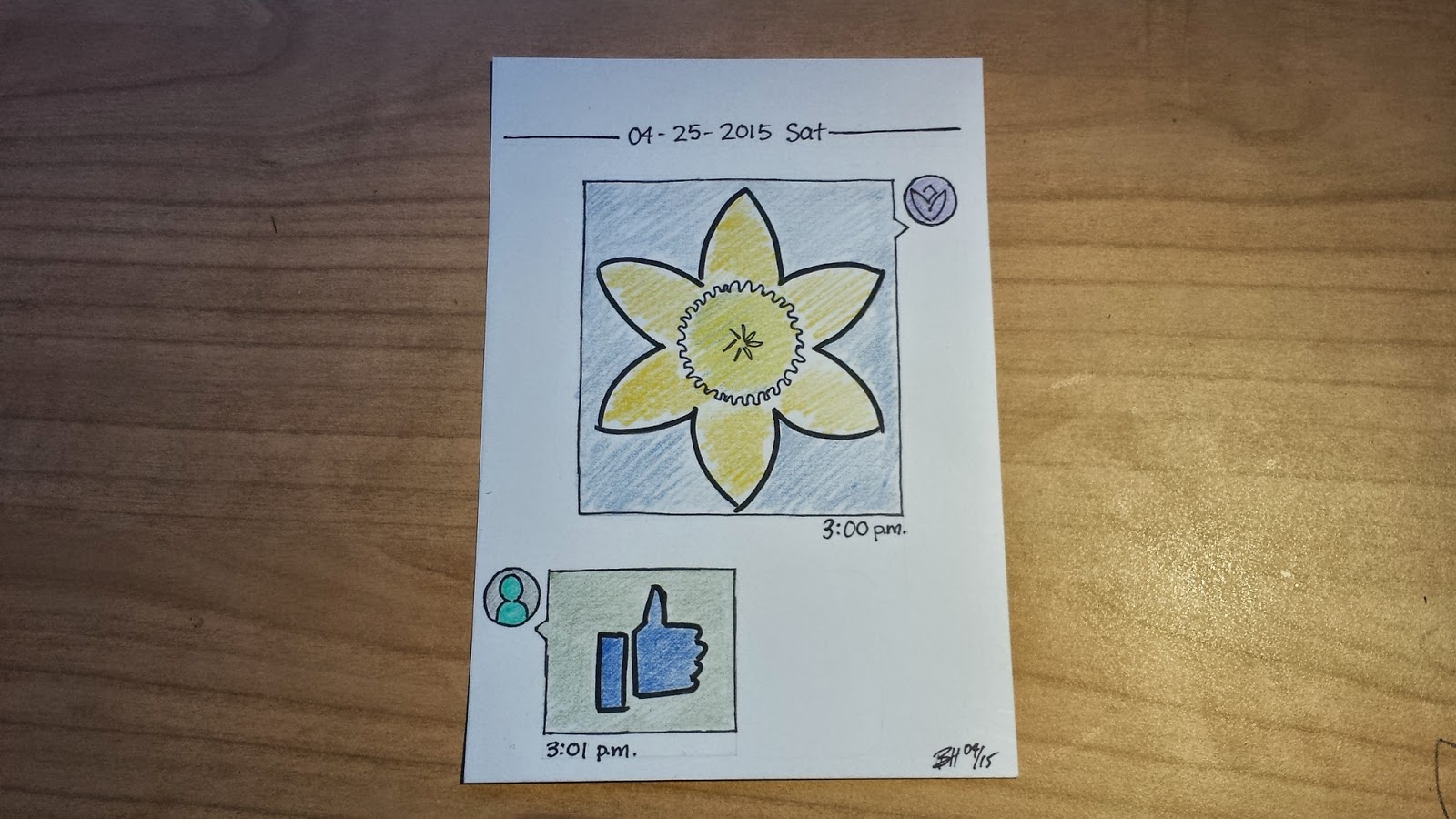
Today, there will be a moment of silence to remember young adults with cancer: the connections we've made, the support we have for each other, and the friends we have lost. It is a ritual started by YACC, an organization created for young adults dealing with cancer, and will be repeated the last Saturday of every April.

A daffodil for young adults with cancer
Never Give Up On Your Dreams
I want a future without cancer. How about you?

1 Canadian Cancer Society’s Advisory Committee on Cancer Statistics. Canadian Cancer Statistics 2014. Toronto, ON: Canadian Cancer Society; 2014. Link to document: cancer.ca/statistics
2 Young Adult Cancer Canada. "History" http://www.youngadultcancer.ca/history/
3 Canadian Cancer Society "Cancer in young people" http://www.cancer.ca/en/about-us/news/national/2010/cancer-in-young-people/?region=on#ixzz3YLI3X6eV
4 Prithwish D, Ellison LF, Barr ED et. al. (2011) Canadian adolescents and young adults with cancer:opportunity to improve coordination and level of care. CMAJ 183 (3). Link to document:http://www.cmaj.ca/content/183/3/E187.full.pdf
"Temper us in fire, and we grow stronger. When we suffer, we survive." - Cassandra Clare, City of Heavenly Fire


